Partnership without language barriers: introducing Navixy Meet

AuthorDaniel N., CEO of Navixy
When we talk about doing business internationally, we usually talk about markets, currencies, regulations, time zones, and how sales work locally. I'd add something less visible to that list: the language your team works in.
A channel partner's founder may be comfortable talking with Navixy in English or Spanish. Their colleagues in sales, customer onboarding, and technical support may find those same conversations much harder.
When every conversation depends on a bilingual colleague, it also depends on that person's availability. Specialists wait for questions and answers to be relayed, or switch to written communication. Work slows down, and details can get lost along the way.
That's why we're building Navixy Meet: to give the whole partner team direct access to Navixy in the language they use to sell, implement, and support solutions. Our business has long relied on a global partner network with local expertise. Meet makes that relationship more accessible to everyone on the team.
Language shapes what your team can get done
It's easy to think of language as an interface setting. Translated menus are helpful, but they can seem secondary to the business itself. For a telematics provider or systems integrator, language also determines who can ask a question, explain a customer's requirements, understand the answer, and decide what to do next.
Take a new hire responsible for customer onboarding. They need to understand the setup process, what information to collect from the customer, and when to bring in the technical team. A direct conversation with Navixy helps them put that knowledge to work. Without it, the founder keeps translating and routing other people's questions.
The same problem comes up when a sales specialist is developing a solution for a new customer segment, an engineer needs to clarify an integration, or the support team encounters an unusual customer issue. As the partner grows, having one person handle every conversation with the platform provider becomes harder to sustain.
The everyday conversations matter most
One compelling use for Navixy Meet is a call where a partner brings a customer together with Navixy specialists. For a custom integration, for example, it helps to have the people who understand the business goal, technical constraints, and implementation requirements in the same conversation.
But I see the greatest value in the conversations that happen much more often: a product walkthrough, a discussion about a sales opportunity, an implementation question, a technical consultation, or a new colleague's introduction to Navixy. These regular conversations help a partner team build the knowledge and confidence to serve customers and grow the business. They complement the onboarding, solutions engineering, and technical support we provide for integrators.
Here's how I think about those conversations:
| Type of work | What direct access changes |
|---|---|
| Everyday sales, implementation, and support | The person doing the work can ask the question directly. |
| Onboarding and team development | New colleagues get the context they need and can put it to use. |
| Joint customer projects | The partner, customer, and Navixy work through a specific problem together. |
That third use matters in complex projects. The first two make it a natural next step: the team is already used to working with Navixy directly, rather than waiting for a recap of the founder's latest call.
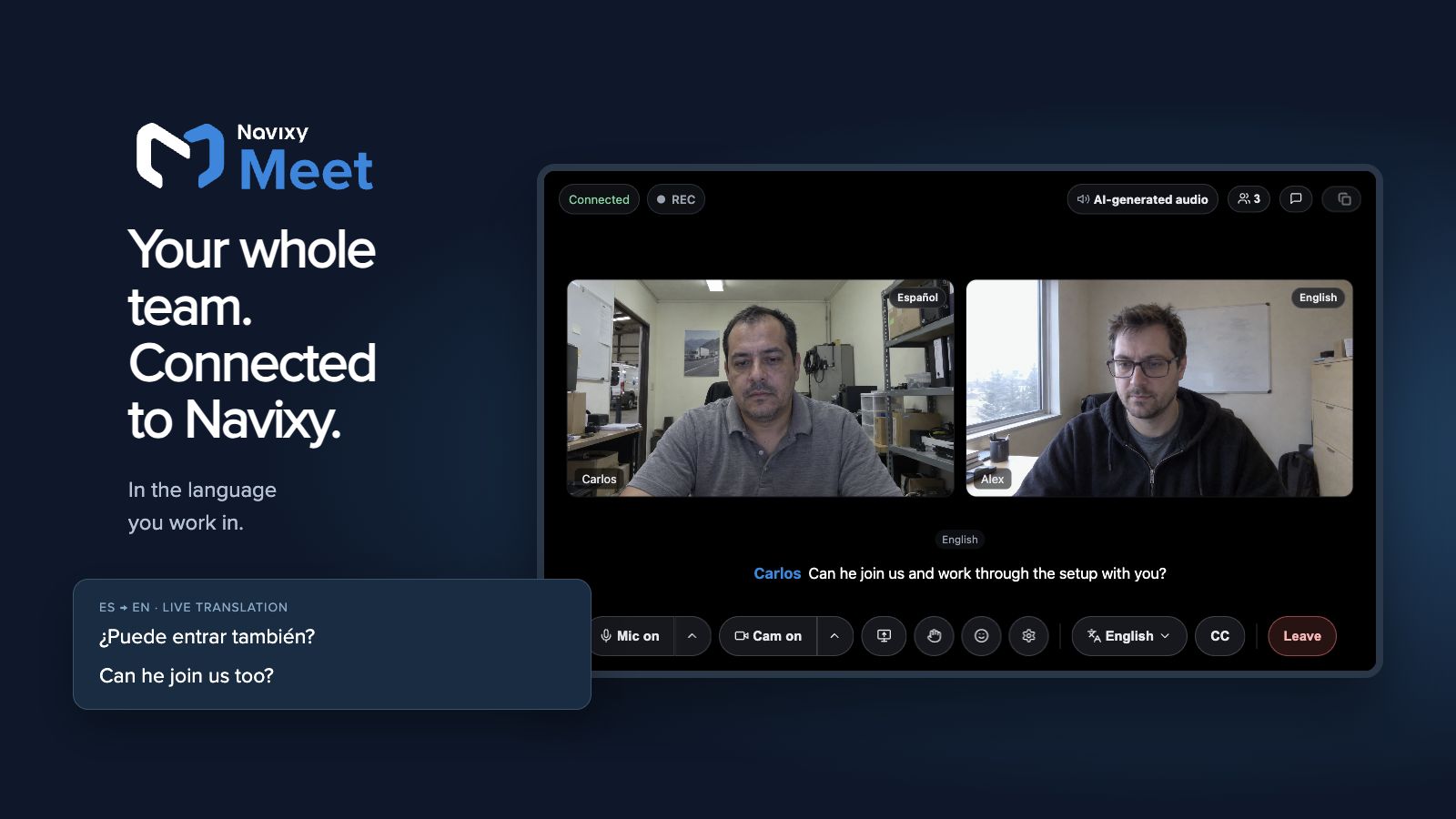
A working conversation in Navixy Meet, with Spanish speech translated into English. Turn on the sound.
Get the right people into one conversation
A productive meeting needs the people who can move the work forward. The sales lead explains what the customer has been promised. The engineer explains the technical constraints. A Navixy specialist helps identify the right configuration or integration approach. The customer joins when the decision affects their systems or workflow.
When everyone can speak and listen in their chosen language, they have more room to explain the details. Questions come up while the group can still resolve them together. Everyone works from the same context, with fewer details passing through secondhand accounts.
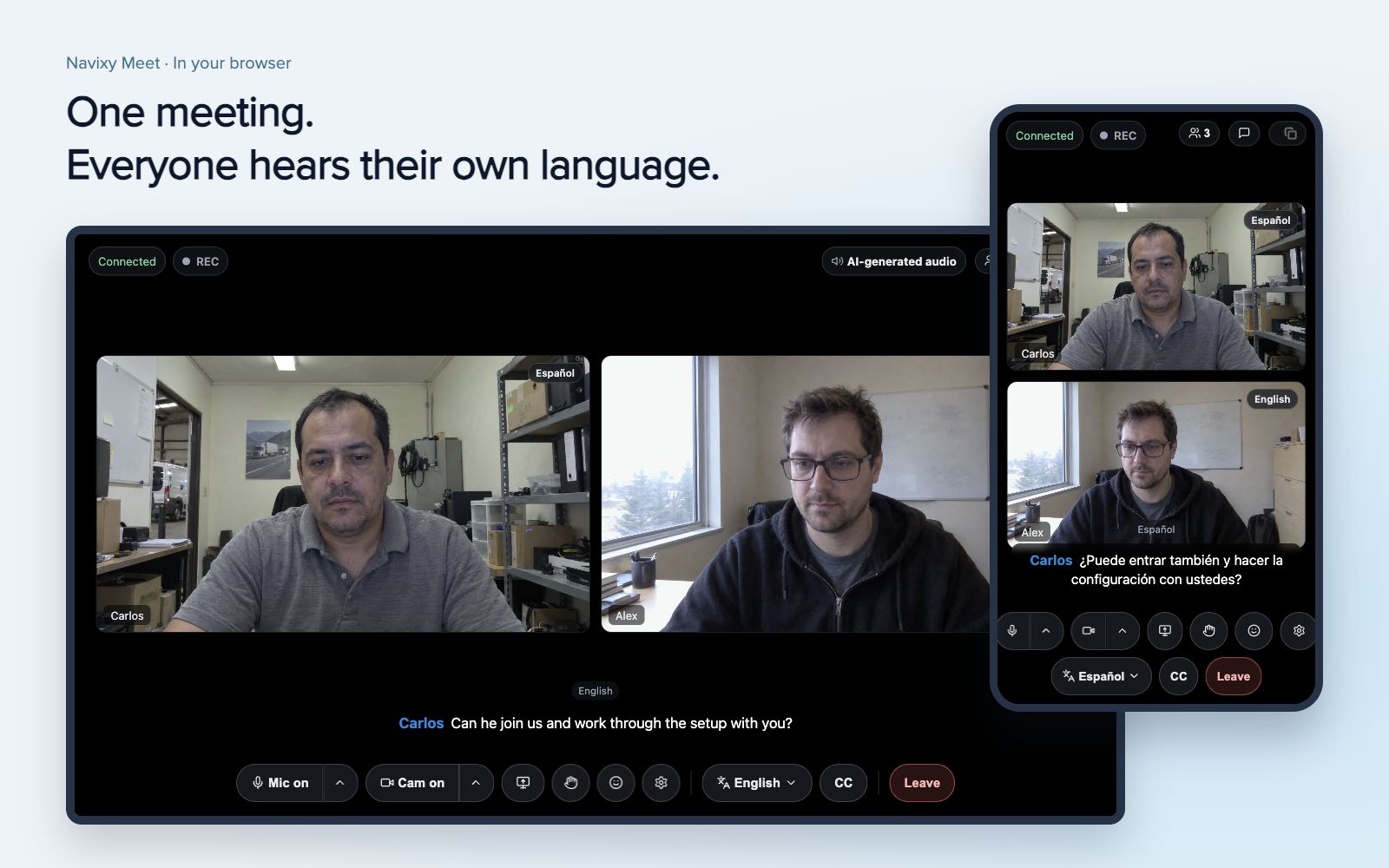
Navixy Meet supports live translation across more than 70 languages. Each participant chooses the language they want to speak and hear. Guests can join from a desktop or mobile browser, with no app to install and no account to create. Bringing the right colleague into a call should be straightforward.
Make the next step clear
A meeting earns its value through what happens afterward. It helps to end with a clear next step: who will arrange access, who will check the configuration, what the customer needs to provide, and when the team will review the result.
Navixy Meet provides recordings, transcripts, and AI summaries for internal use at Navixy. These help our team preserve context and follow through on what was agreed. We should share outcomes with partners and customers in the agreed format, following the applicable recording and access policies.
That continuity matters when a sales conversation today becomes an engineering or implementation task tomorrow. The next person can pick up the work with the context they need.
Start with the next question your team needs to resolve
You don't need to wait for a major integration project. Start with a question that would benefit from a direct conversation: a new colleague learning the product, a customer requesting a different workflow, an engineer planning an integration, or a sales team preparing for an important meeting.
Bring the people doing the work. Decide beforehand what you want to resolve. Invite the customer if their input would help. After the meeting, document who owns the next step and when to review progress.
This is a simple way to work, but it changes the relationship. The founder no longer has to translate every detail. The team can handle more on its own. The customer sees a partner who can bring the right expertise to the problem. And Navixy gets closer to the people who turn the platform into a working service in their local market every day.
If your team has a question to work through, book a meeting in Navixy Meet. Choose the language and time that work for you.