OEM telematics vs. aftermarket GPS tracking
OEM telematics is factory-installed and manufacturer-run; aftermarket GPS tracking is third-party hardware you install and control. OEM wins on zero setup within one brand; aftermarket wins on cross-brand coverage and flexibility. Most mixed fleets end up running both, unified in one platform.
Quick answer
Choose OEM telematics if your fleet is new, single-brand, and you want factory diagnostics with zero install effort.
Choose aftermarket GPS tracking if your fleet spans brands, includes older vehicles, or needs extra sensors.
Choose both (unified in one platform) if you run a mixed-brand or mixed-age fleet — the common case.
The full comparison
Eight factors that actually change the decision for a fleet.
| Factor | OEM telematics | Aftermarket GPS tracking |
|---|---|---|
| Setup & activation | Built in at the factory — active as soon as the vehicle is delivered and the program is enabled | Requires purchasing and physically installing a device on every vehicle |
| Brand & vehicle coverage | Limited to that manufacturer's program — a mixed-brand fleet means multiple OEM portals | Works across any make, model, or age of vehicle from one vendor |
| Data depth & signals | Strong on factory diagnostics — DTCs, odometer, fuel/battery, engine or powertrain status | Strong on location and custom I/O — extensible with extra sensors, cameras, fuel probes |
| Ongoing cost model | Manufacturer subscription fee per vehicle, set and changed by the OEM | Hardware cost up front, plus a platform subscription you choose and control |
| Installation & maintenance effort | Zero installation; maintenance tied to the manufacturer's own service network | Device install, firmware updates, and SIM/connectivity management fall on you or your installer |
| Data ownership & control | Access and export are governed by the manufacturer's terms and API limits | You typically own the raw data outright and can export or self-host it |
| Retrofit for older vehicles | Not possible — limited to specific model years with factory connectivity hardware | Works on any vehicle regardless of age, including pre-telematics fleets |
| Best fit | New vehicles from a single manufacturer, factory diagnostics use cases | Older vehicles, mixed brands, or use cases needing extra sensors |
Want the narrative version, with real rental-fleet and construction-equipment examples? Read OEM vs. aftermarket telematics for rental fleets on the Navixy blog.
The decision, in practice
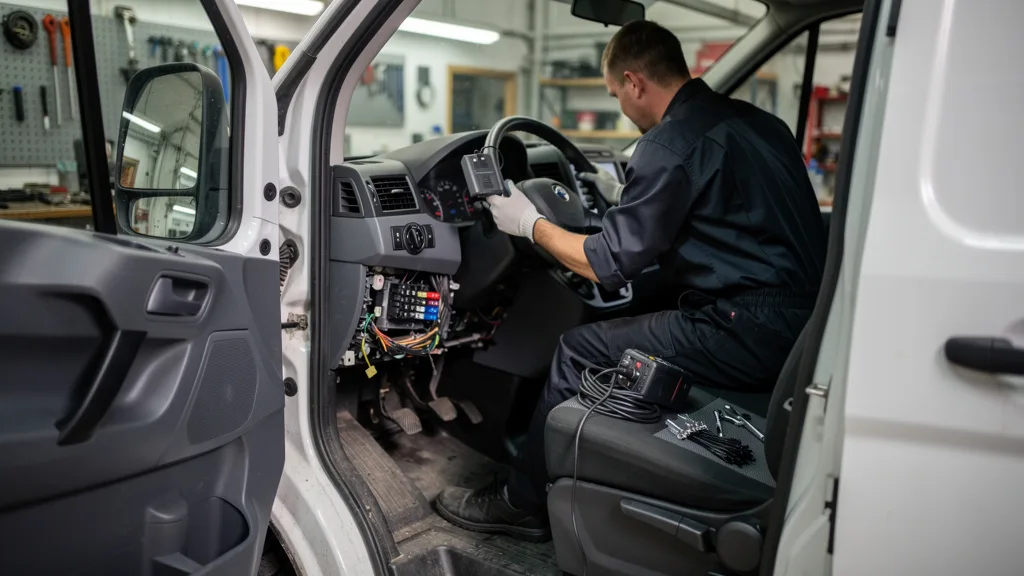
OEM telematics is switched on from the driver's seat; aftermarket tracking is bolted on in a workshop. That single difference drives almost everything else — install cost, sensor flexibility, brand coverage, and who ultimately controls the data. Here is when each path wins.
Choose OEM telematics when...
- Your fleet is new and predominantly one manufacturer
- You want factory-grade diagnostics without buying hardware
- Fast time-to-value matters more than deep customization
- Not a fit if your fleet spans multiple brands or older vehicles
Choose aftermarket GPS tracking when...
- Your fleet mixes brands, ages, or vehicle types
- You need extra sensors — temperature, fuel probes, cameras
- You want to own your data and choose your own platform
- Not a fit if you want zero install effort and one integrated brand
Most fleets run both
Most real fleets aren't pure OEM or pure aftermarket — they're a mix that changes every time a vehicle is bought, sold, or replaced. Navixy is source-agnostic: OEM data (Ford Pro and others) and aftermarket devices land in the same platform, the same dashboard, and the same IoT Logic automation rules, so the choice above stops being permanent.
FAQ: OEM vs. Aftermarket Telematics
Stop choosing. Run both in one platform.
Navixy unifies OEM feeds and aftermarket devices into a single fleet view — no matter how your fleet is made up today or how it changes tomorrow.
Back to the OEM telematics overview.