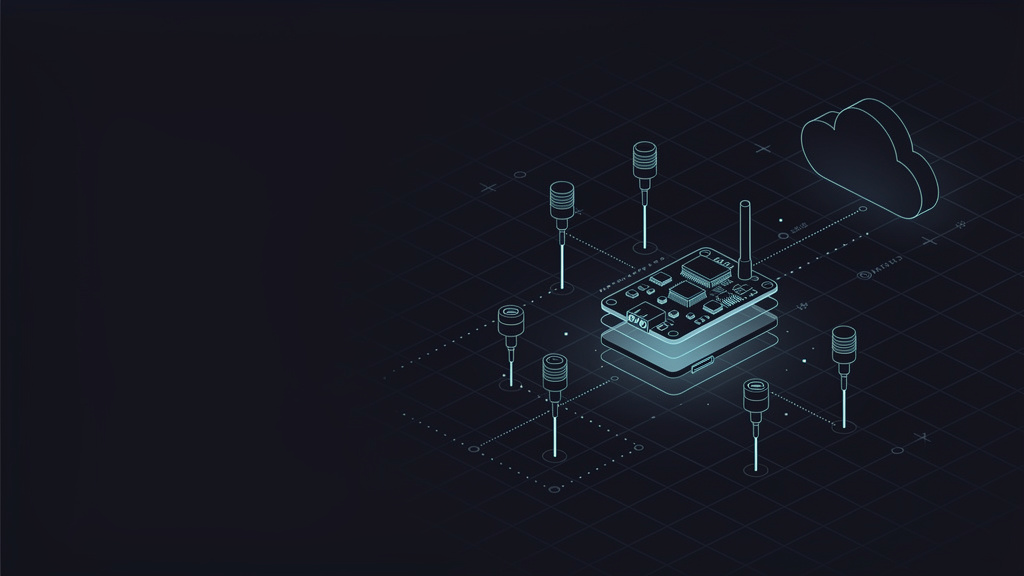
Build cold-chain telematics on Navixy.
How TSPs, system integrators, and IoT teams assemble a cold-chain solution on Navixy: capture condition off any sensor or reefer, automate the decision with IoT Logic, and turn it into audit-ready proof with IoT Query — on the hardware your lanes already use.
Fires on the jump between readings — before the absolute limit is breached.
Five moves from sensor to proof
Each layer is buildable independently and composes into one solution — so you start with what a lane needs today and extend without re-platforming.
- 01
Capture
Read condition off BLE and 1-Wire probes, reefer CAN/J1939, serial/analog, door and fuel — across mixed and contractor fleets. Navixy normalizes 2,500+ device protocols into one model.
- 02
Automate
Express detection in IoT Logic with JEXL: absolute thresholds, rate-of-change between readings, door-plus-geofence correlation, debounce, and an escalation ladder.
- 03
Store & query
Persist to the Business Repository and compute with IoT Query — mean kinetic temperature, time-out-of-range, and full condition history on a schedule.
- 04
Integrate
Push results to your TMS, WMS, or BI over an open REST API and webhooks — or let Navixy be the system of record behind your own app.
- 05
Deliver
Ship it white-label: your brand, your domain, scheduled reports and proof-of-condition records your customers and auditors trust.
Capture condition off any device
Cold chain is a sensor problem before it is a software one. Navixy speaks the interfaces the load actually uses — and keeps logging when the network drops.
Measure the load, not just the unit
A reefer reports its own supply and return air — but the cargo sits a few degrees warmer and drifts toward the door. Capture the unit over CAN/J1939 and place BLE or 1-Wire probes in the load (front, middle, rear), and Navixy normalizes every source into one schema your logic and reports read from.
The unit reports its supply air; the load sits a few degrees warmer and rises toward the door. Place probes in the load — front, middle, rear — not just on the unit.
BLE & wireless sensors
Battery wireless temperature, humidity, and door sensors — ideal for trailers, totes, and last-mile boxes without wiring.
1-Wire multi-point probes
Chain front / middle / rear probes inside the load — because supply air is not product temperature.
Reefer CAN / J1939
Read set point, supply and return air, alarms, fuel, and run-hours straight off Thermo King and Carrier units.
Offline buffering
Devices log to memory and store-and-forward on reconnect, so dead zones and unhooked trailers leave no gaps.
One platform, five layers
The same composable stack that runs fleet and field operations, read here through a cold-chain lens. Build at any layer; the ones below it are already solved.
- L1 Ingestion — 2,500+ device protocols normalized into one schema
- L2 IoT Logic — device-agnostic rules in JEXL, no firmware work
- L3 IoT Query — MKT, time-out-of-range, and custody history on demand
- L4 / L5 — open API, webhooks, and white-label delivery
White-label apps, dashboards, scheduled reports & solution templates
Open REST API, webhooks & agent interface — push to TMS / WMS / BI
Business Repository + IoT Query — MKT, time-out-of-range, custody history
IoT Logic — thresholds, rate-of-change, geofence/door correlation, escalation
2,500+ device protocols normalized — reefer CAN/J1939, BLE, 1-Wire, GPS
sensors in · proof out
Start from a working IoT Logic flow
Import a ready-made flow, point it at your device, and tune the thresholds. Three cold-chain starters ship as importable JSON.
Rate-of-change differential — opened in the editor
The flagship guard branches on a JEXL rule: log while the load is in range, escalate the moment condition drifts between readings — before an absolute limit is breached. Import it, point the Data Source at your device, and tune the threshold; no firmware work.
Temperature & humidity threshold
Classic absolute-limit alerting for a fixed set-point band — the place most deployments start.
Idling / power detection
Catch a reefer that stopped running or lost power — a leading indicator of an excursion to come.
Build your own
Compose nodes in the IoT Logic editor — data source, logic, attributes, webhooks — with no firmware changes.
Reason over the record with IoT Query
IoT Logic decides in the moment; IoT Query is its analytical other half — it computes the compliance math on the stored record, applies ML to clean signals and predict excursions, and answers plain-language questions, so the proof writes itself.
Ask in plain language — it answers in compliance math
Type the question a quality manager would ask. IoT Query compiles it to a query over the Business Repository — mean kinetic temperature, time-out-of-range, and excursions per lane — while a model denoises a drifting probe and forecasts the breach, before it becomes a rejected load.
“Which lanes ran above +8 °C for over 30 min last week — and is any probe drifting?”
FROM readings WHERE week = -1 GROUP BY lane
Compliance math, computed
Mean kinetic temperature, time-out-of-range, dwell, and excursion counts over any window — the numbers GDP, HACCP, and FSMA actually ask for, produced on a schedule.
ML for reasoning & signal
Denoise a drifting probe, tell a sensor fault from a real excursion, and forecast a breach from the rate of change — so alerts fire on product risk, not noise.
Conversational analytics
Ask “which lanes breached above +8 °C last week?” and get a chart and a number back — no SQL, no BI ticket, no waiting on a report build.
Decisions & proof, out
Auto-clear a clean load or flag a disputed one, then push the record to your TMS, BI, or a one-page PDF — the same evidence that settles a rejected delivery.
What integrators ask before they build
How do you handle air temperature vs product temperature?
What sampling interval and resolution should we expect?
Can detection logic run without custom firmware?
How do we get audit-ready numbers out?
Can we run this multi-tenant and white-label?
How does Navixy fit our existing TMS / WMS / BI?
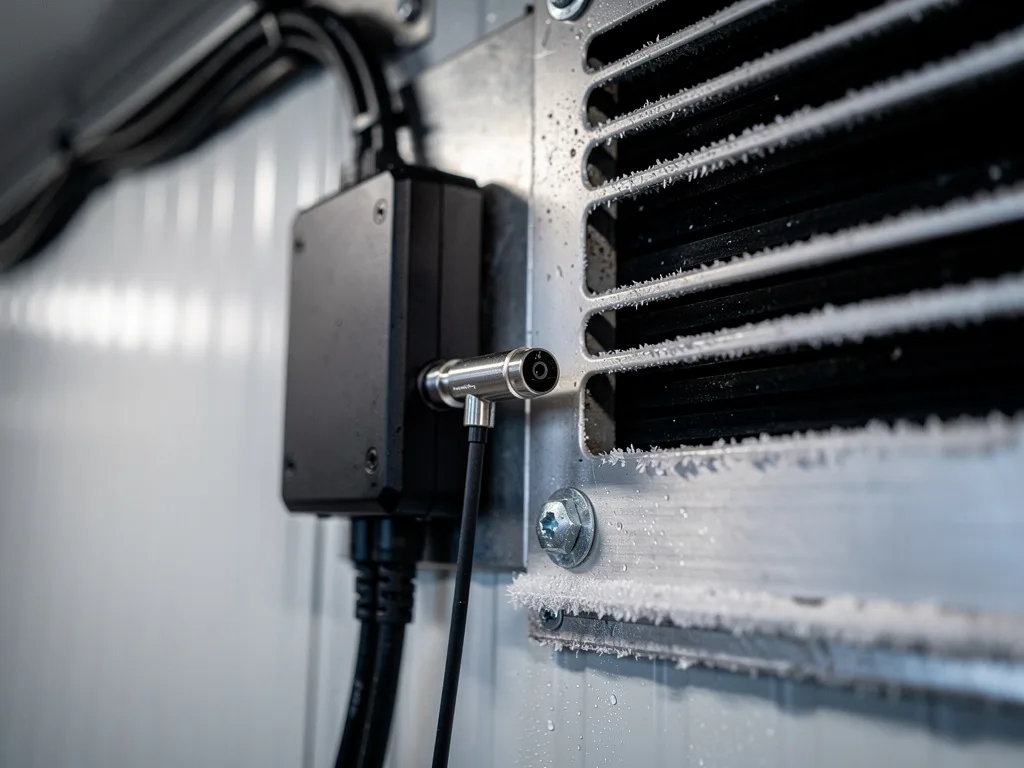
The logic you author runs on hardware built for the cold
The rules and reports are device-agnostic — but they run on real, ruggedized trackers, probes, and gateways rated for reefer interiors and trailer power. Navixy certifies 2,500+ models, so you match the sensor to the lane and trust the data it sends back.
- Reefer-rated trackers, BLE / 1-Wire probes, and solar gateways
- Capture over reefer CAN / J1939, serial, and analog inputs
- Store-and-forward through dead zones and unhooked trailers
Design your cold-chain build with us
Bring your products, lanes, devices, and compliance requirements. Our solutions engineers will map the sensors, IoT Logic flows, and IoT Query reports — and the certified hardware to run them.