Navixy and Teltonika FTx92/FTx96: targeted solutions beyond standard fleets

AuthorBenjamin Hayes
Not every fleet is a fleet of trucks. Sometimes it's electric forklifts moving through a warehouse. Sometimes it's refrigerated vehicles transporting temperature-sensitive cargo. Sometimes it's heavy equipment spread across multiple job sites.
These projects rarely fit a one-size-fits-all tracking setup.
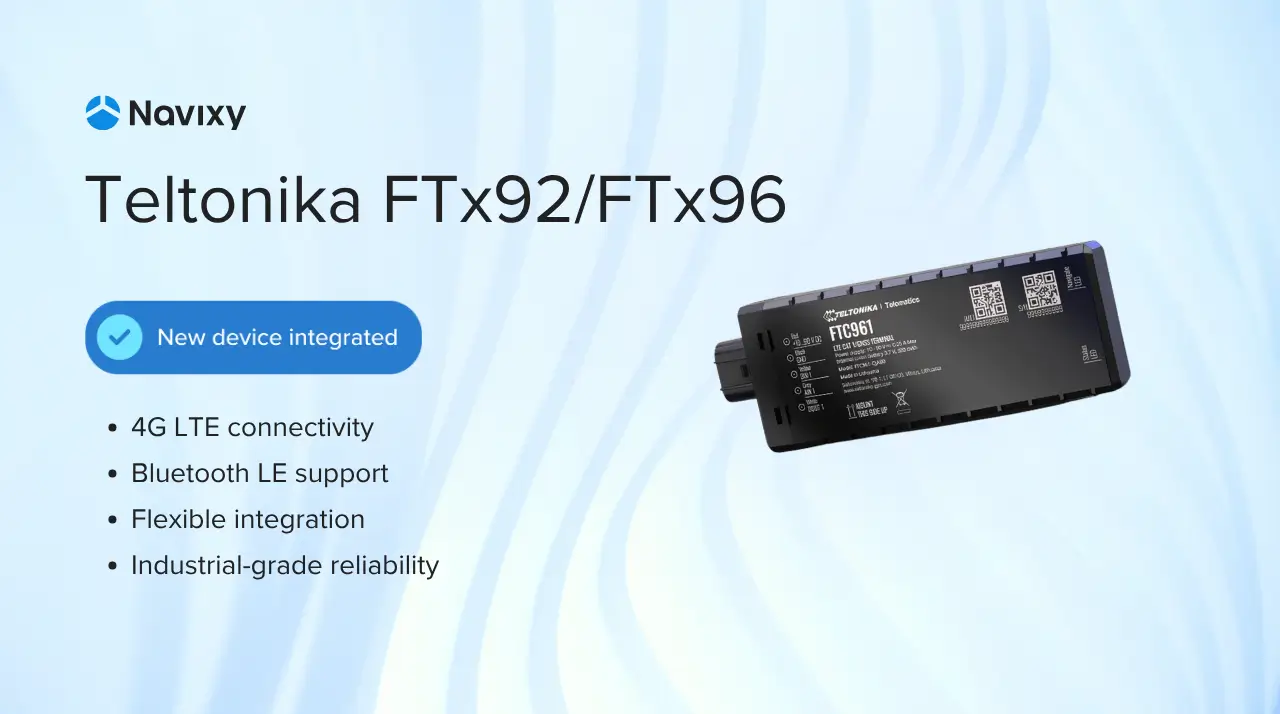
Integrated with Navixy, the Teltonika FTx92 and FTx96 series brings together high-voltage support, Bluetooth sensor connectivity, and rugged hardware for deployments that demand something more specialized.
Not every asset runs on 12 volts
When evaluating tracking hardware, three questions usually come first.
- What voltage does the asset use?
- What environment will the tracker operate in?
- Does the solution require sensor data beyond location?
The FTx92 and FTx96 series address each of these requirements with purpose-built device variants.
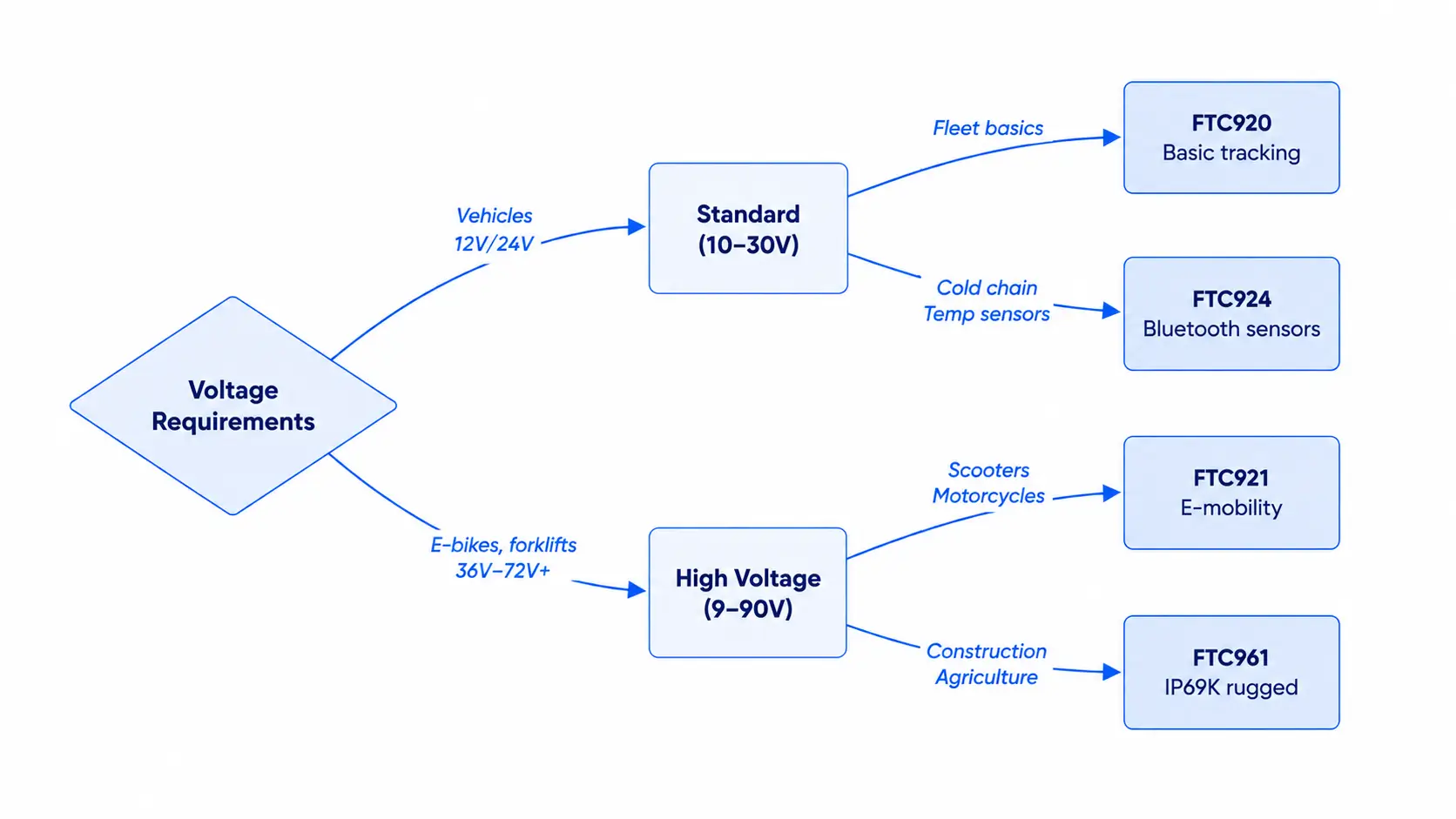
High-voltage support for electric assets Standard cars, vans, and light trucks typically operate on 12V or 24V systems, well within the range of the FTC920 and FTC924. Electric scooters, e-bikes, forklifts, and other battery-powered equipment often use 36V, 48V, or 72V systems. The FTC921 and FTC961 support 9-90V input, allowing direct integration without additional converters or workarounds.
Protection for demanding environments Construction sites, farms, and industrial facilities can be unforgiving places for electronics. The FTC961 features IP69K protection, making it resistant to dust, high-pressure cleaning, and harsh weather conditions.
Wireless sensor connectivity The FTC924 and FTC927 support Bluetooth 5.4 LE sensors, enabling temperature, humidity, and door monitoring without running additional wiring through the vehicle or asset.
All six variants, FTC920, FTC921, FTC924, FTC927, FTC961, and FTC965, are already integrated with Navixy. Device communication, data mapping, and configuration are ready to use out of the box.
Explore the full list of Navixy certified devices and discover hardware options for electric mobility, cold chain monitoring, heavy equipment, and more.
FTC921, FTC924, FTC927, and FTC961 use cases across electric mobility, cold chain, and heavy equipment
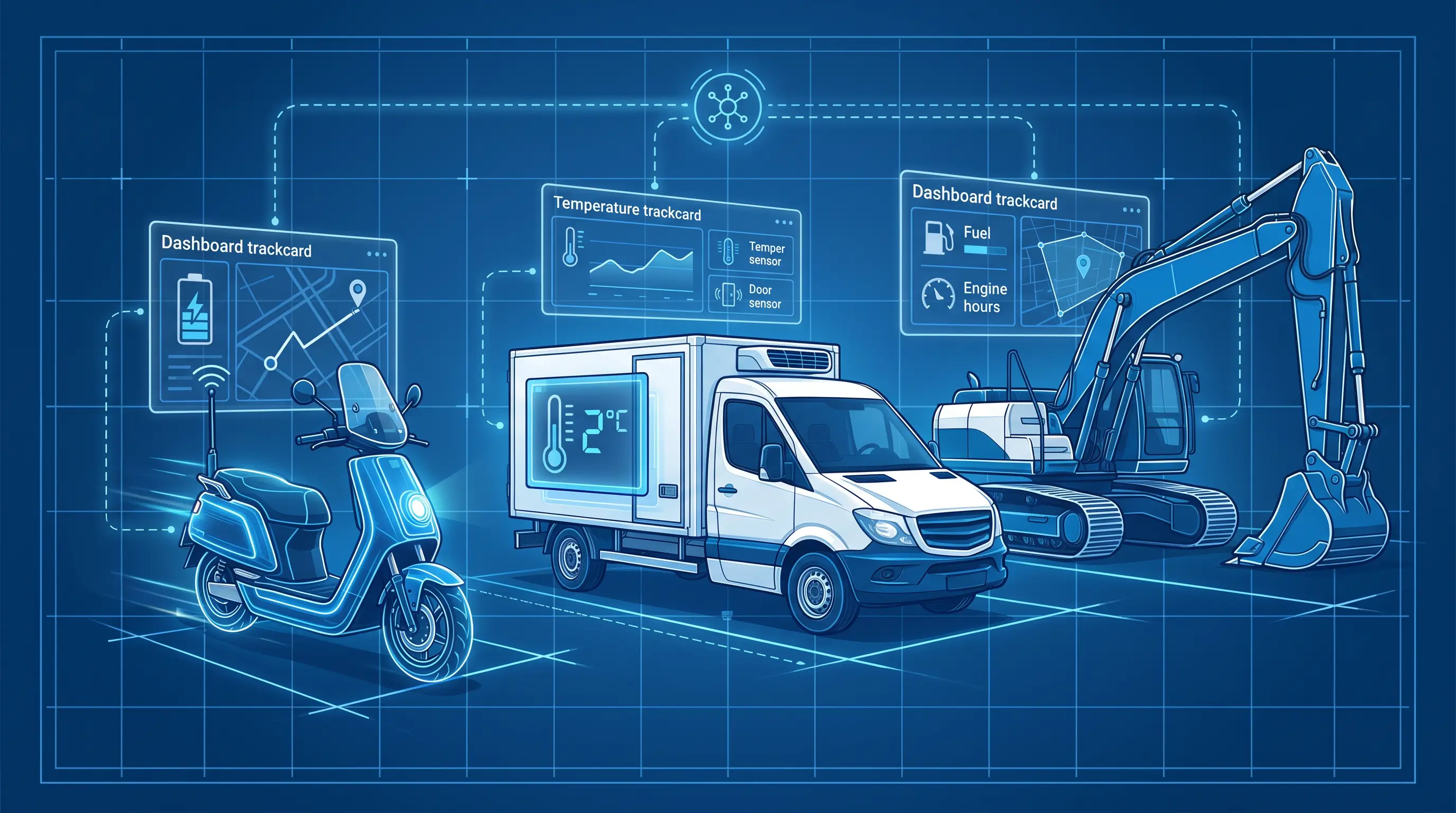
As mentioned, the newly integrated devices are designed to support very different operational environments, from shared electric mobility fleets to heavy equipment operating in demanding conditions. Combined with Navixy's capabilities and advanced tools like IoT Logic, they enable businesses and TSPs to move beyond basic location tracking and build services around automation, asset visibility, and operational intelligence. The following examples illustrate how these devices address real-world challenges across multiple industries.
Tracking electric fleets without hardware workarounds
Shared mobility operators know the challenge. A scooter battery dies somewhere in the city, and the operations team needs to locate the vehicle before it becomes someone else's problem.
Reliable tracking is essential, but many traditional GPS trackers were designed for conventional vehicle electrical systems. Connecting them to high-voltage electric fleets often requires additional components that increase complexity and maintenance requirements.
The FTC921's 9-90V input range solves this directly. It can draw power from the vehicle's main battery, eliminating the need for separate power arrangements.
One less component means one less potential failure point. Shared mobility operators already have enough vehicles to manage. Tracker maintenance should not become a fleet of its own.
For operators of electric bikes, scooters, and motorcycles, location data is only part of the picture. Battery state-of-charge impacts route planning. Movement outside operating hours may indicate theft. Speed patterns can support safety and compliance initiatives.
With Navixy IoT Logic, these data points can trigger automated workflows. For example, when battery charge falls below a defined threshold, the platform can automatically generate alerts and notify operations teams before the vehicle becomes unavailable.
For TSPs, this creates an opportunity to deliver a complete e-mobility solution rather than basic location tracking.
Tracking the cargo, not just the vehicle
In cold chain operations, knowing where the vehicle is only solves half the problem.
The real question is whether the cargo remained within acceptable conditions throughout the journey.
The FTC924 and FTC927 support Bluetooth 5.4 LE sensors that transmit temperature, humidity, and other environmental data directly through the telematics device. There is no need for separate monitoring infrastructure, additional cellular connectivity, or complex wiring.
Temperature probes placed throughout the cargo area can continuously report conditions alongside location data.
Multiple sensors provide greater visibility. One sensor can monitor conditions near the refrigeration unit. Another can track temperature fluctuations near the cargo door. A third can measure conditions in the middle of the load, where the product itself is stored.
With IoT Logic, operators can define escalation workflows for temperature excursions. Initial threshold breaches can notify drivers. Continued deviations can trigger alerts for dispatchers or customer service teams.
For TSPs, the opportunity is straightforward. Instead of offering location tracking alone, you can provide location and cargo-condition monitoring through the same deployment and the same platform.
Some assets live rougher lives than others
Heavy equipment tracking is about much more than theft prevention.
Construction companies, agricultural operators, and industrial businesses also need utilization monitoring, geofencing, maintenance tracking, and visibility into asset movement across multiple job sites.
The challenge is environmental durability.
Dust, vibration, mud, rain, and pressure washing are part of daily operations. If an asset spends its life in harsh conditions, the tracker must be able to do the same.
The FTC961's IP69K rating allows it to withstand high-pressure, high-temperature cleaning while remaining fully protected against dust and water ingress.
Nobody installs a tracker expecting to recover a stolen excavator. The goal is to avoid losing one in the first place.
With Navixy IoT Logic, theft detection can become more context-aware. Instead of generating alerts for every movement event, operators can create rules that combine ignition status, geofences, and operating schedules.
Movement inside a work zone during business hours is normal. Movement outside a designated area at 3 a.m. on a Sunday deserves attention.
For agricultural assets that spend months idle between seasons, optimized power management helps preserve battery life while maintaining visibility when it matters most.
Hardware is rarely the hard part
The devices themselves are only one piece of the solution. The real challenge for many TSPs and system integrators is bringing new telematics services to market quickly without spending months on integrations, protocol development, and device testing.
Because the FTx92 and FTx96 series are already integrated with Navixy, provisioning, data processing, configuration management, and firmware updates are ready from day one.
With tools such as IoT Logic and IoT Query, partners can transform telematics data into automated workflows, operational insights, and custom reporting for different industries and use cases. IoT Logic enables event-driven automation, while IoT Query provides a flexible analytics layer for building reports tailored to specific business requirements.
Whether you're targeting electric fleets, temperature-sensitive logistics, or heavy equipment operators, the opportunity is the same: create higher-value solutions without building the technology foundation from scratch. Instead of spending time on device integration and infrastructure, your team can focus on designing, deploying, and growing services that address real customer needs.
Interested in expanding your telematics offering? Contact our team to explore the devices, workflows, and platform capabilities that best fit your business.