Pricing for GPS monitoring and IoT platforms: how usage-based billing works

AuthorPavel Rudenko, Product Owner at Operations team
Picture a procurement lead at a regional carrier lining up three vendor quotes for the same 42-vehicle mix. Every one is headlined "per tracker," yet the totals can differ widely, and none of the cover sheets explain why.
The gap isn't about which vendor is cheaper. "Per tracker" is quietly standing in for two different cost drivers at once: how many assets you track, and how much of the platform those assets actually use. A flat fee bundles both into one number without pricing them separately, so different vendors bundle that math differently — which is why the same fleet produces incomparable totals.
Cloud infrastructure providers such as AWS and Google Cloud settled this years ago: they meter what you provision and what you consume as two separate line items, then price each on its own. Fleet and IoT platforms are still catching up, so before comparing a single number, run each quote through three independent checks: what it tracks, what it uses, and what it lets you combine.
Why a fixed price per GPS tracker doesn't fit a growing fleet
A flat tier charges the same fixed monthly fee per tracker for a bundle of features. That fee doesn't change whether a truck logs twelve hours a day or sits in the yard all winter, or whether the fleet uses two of the bundle's ten features or all of them.
Add fifteen seasonal vehicles for harvest season, or pilot one new analytics use case at a single depot, and a tiered contract can force a choice: renegotiate the whole fleet into a bigger bundle, or run the pilot on a workaround that doesn't scale.
Software has already made this shift industry-wide: Metronome and Greyhound Capital's January 2025 survey of 100 SaaS companies found that 85% had adopted some form of usage-based pricing, and 77% of the largest software companies had built it into their revenue model. Fleet-telematics pricing pages show a different pattern: browse a handful of them and it repeats — a small set of flat monthly tiers, priced per tracker, each gated to a feature bundle, independent of actual consumption.
Hardware vendors set the pricing unit the category still uses
The category didn't design pricing around usage on purpose — most of it inherited a different one. Fleet and IoT telematics grew out of hardware vendors: companies that sold or leased a physical GPS tracker or IoT device, then bundled a software subscription on top to make that hardware useful. The commercial unit that resulted is the device sold, regardless of the platform capability actually consumed.
That model stops fitting once the value moves to the software layer — data pipelines, automation, analytics, multi-tenant partner tooling — because a device-based price doesn't meter any of those dimensions separately. The fix is pricing the platform by how it's actually used.
How to compare GPS monitoring pricing: the Three-Point Test
Call it the Three-Point Test. Any vendor's pricing page, or their sales quote, should give you a clear answer on each of the following.
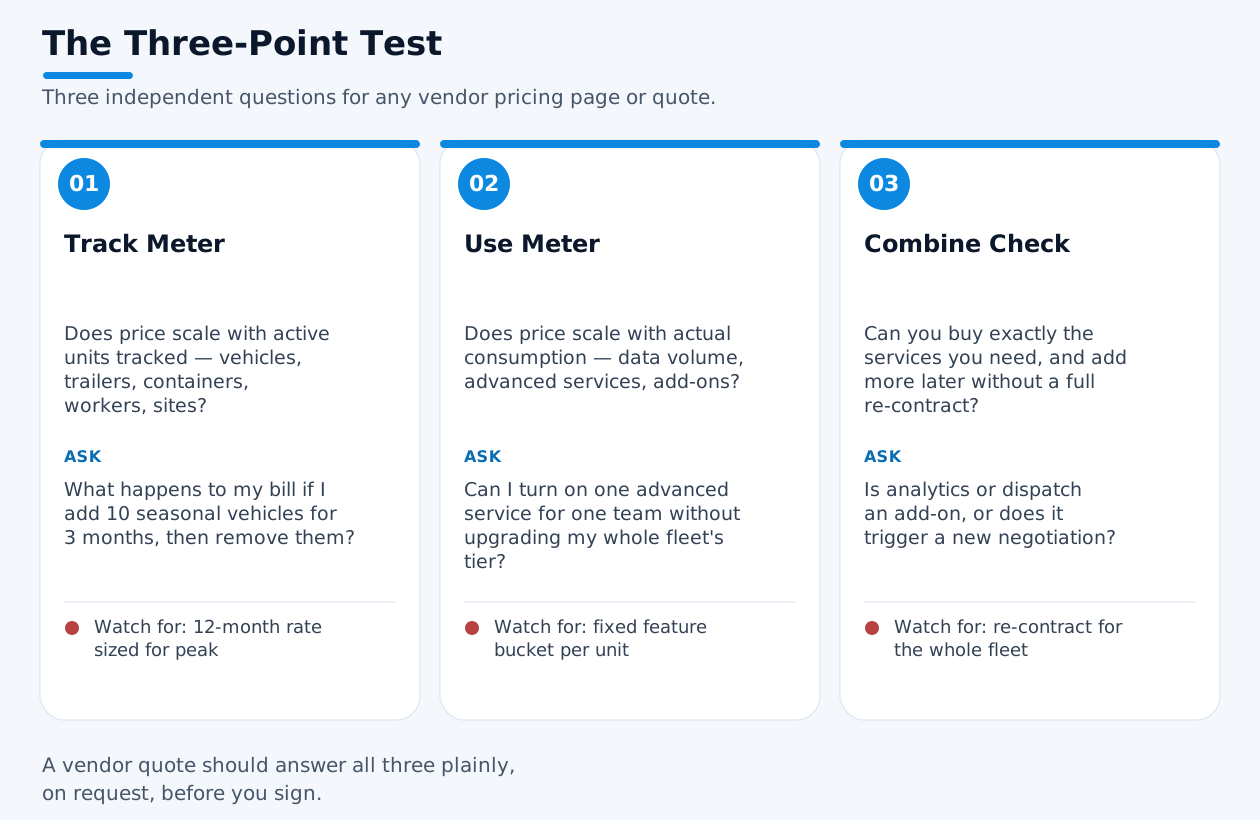
Track Meter: the number of active units
Does the price scale with the number of active units you're tracking — vehicles, trailers, containers, field workers, sites — independent of which features you use? Ask: what happens to my bill when I add ten seasonal vehicles for three months and remove them after?
Use Meter: actual service consumption
Does the price scale with what you actually consume — data volume, advanced services, add-ons? Ask: can I turn on one advanced service for one team without upgrading my entire fleet's tier?
Combine Check: how independently you can add services
This check measures contract flexibility the same way the other two meters measure cost: can you buy exactly the services you need today and add more later without a full re-contract? Asking a vendor to demonstrate how a service actually gets added tells you more than a modular-looking diagram does. Ask: if I start with core tracking and later need analytics or field-service dispatch, is that an add-on, or does it trigger a new contract negotiation?
A seasonal, growing fleet exposes the cost of a rigid tier
Take a generic regional logistics operator: 60 trucks tracked year-round, 15 seasonal trailers added for a three-month harvest push, and a route-analytics pilot they want to run at one depot before deciding whether to roll it out fleet-wide.
A model that passes all three tests would bill this differently at every step. On the Track Meter, it charges for the 15 seasonal trailers only in the months they're actually tracked. On the Use Meter, it bills the analytics pilot by the data volume and queries that single depot generates. On the Combine Check, adding the pilot is a service added to the existing contract, without touching the 60 trucks already running fine.
A flat-tier vendor can require renegotiating the entire fleet's contract just to add that one depot's pilot — worth confirming before you sign.
How Navixy's new pricing model will work
This is the direction, not a finished price list: Navixy is building its pricing toward a business-oriented, flexible model. It will price per tracked business unit — vehicles, trailers, containers, field workers, sites, or other assets — plus usage. Both figures can move after signing: as the business adds or removes units, or uses more of the platform, the bill moves with it.
Growth with the platform shouldn't be capped, and cost should track what you actually use. That's the principle behind pricing based on business metrics: the number of tracked assets, actual consumption, and which services you've turned on.
What to check before choosing a GPS monitoring plan
Pull your current asset roster and your next renewal quote, and run both through the Three-Point Test: does the price track your active units, meter your actual usage, and let you combine only the services you need? Ask any vendor to document in writing what changes your bill when you add a service or a new asset, not just show you a diagram of their architecture. Our view: a quote that can't answer all three plainly isn't a useful basis for comparison — you'd only be paying to guess.
On this page
- Why a fixed price per GPS tracker doesn't fit a growing fleet
- Hardware vendors set the pricing unit the category still uses
- How to compare GPS monitoring pricing: the Three-Point Test
- A seasonal, growing fleet exposes the cost of a rigid tier
- How Navixy's new pricing model will work
- What to check before choosing a GPS monitoring plan