OEM telematics use cases that pay off
OEM telematics use cases span mixed-fleet visibility, predictive maintenance from DTC codes, fuel drain detection, and rental-fleet compliance across brands like Ford, Scania, and Volvo — factory vehicle data put to work to automate maintenance, optimize fuel, and improve utilization.
One dashboard for every OEM brand
Vehicle health, DTC faults, predictive maintenance forecasts, and fuel drain events — Ford, Volvo, Scania, and MAN side by side in a single unified view.
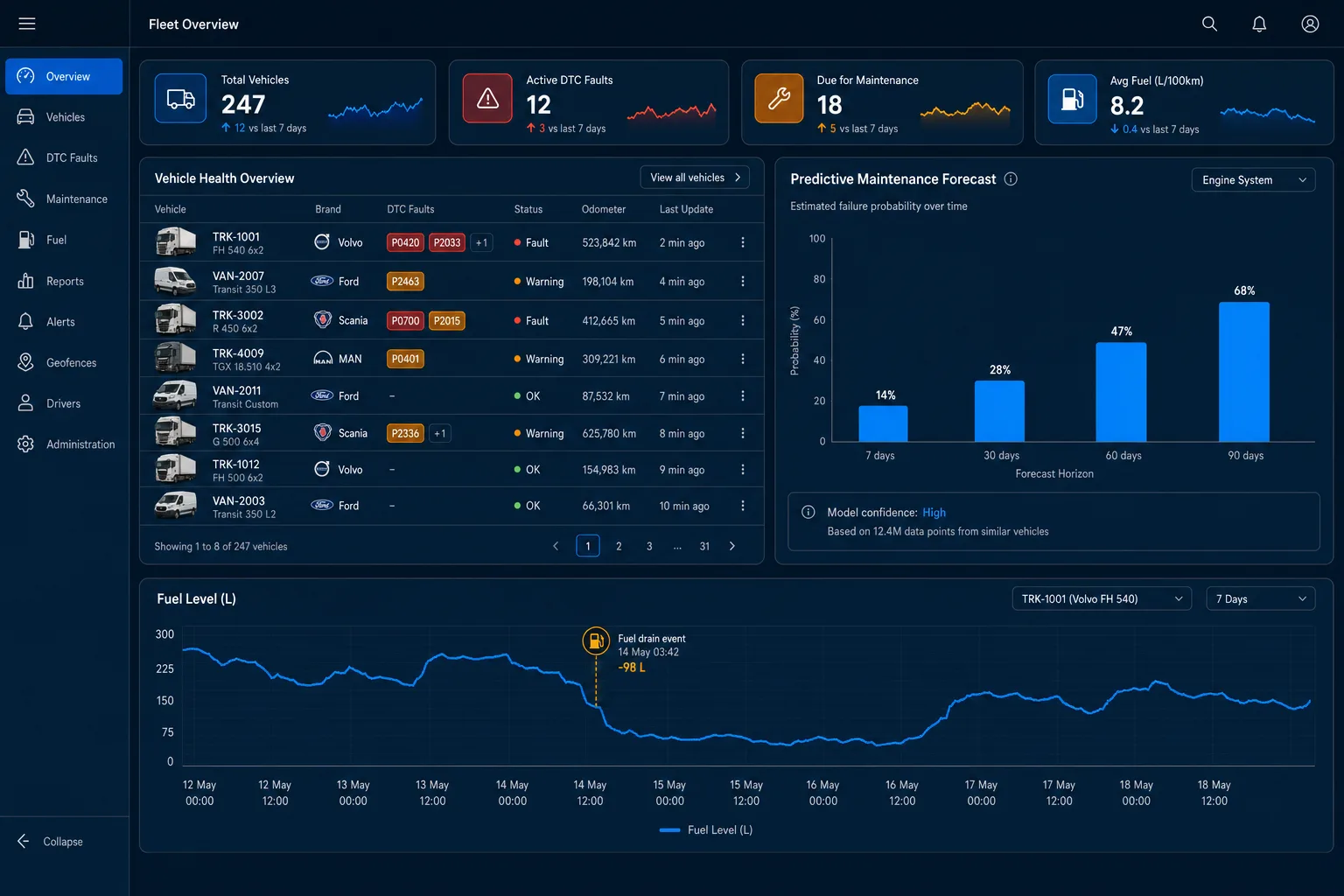
When OEM data stays in silos, opportunities are missed
Every disconnected portal has a price:
- Preventable breakdowns — DTC codes sit unmonitored in each brand's own portal
- Fuel waste — drain events and excessive idling go undetected
- Over-sized fleets — utilization data is never consolidated, so rightsizing stays guesswork
- Missed SLA compliance — rental and leasing operations can't monitor terms across brands

How Navixy enables OEM telematics automation
Navixy fuses OEM vehicle data with aftermarket signals, then applies automation rules to trigger actions and insights.
Data fusion
Normalize OEM APIs (Ford, Scania, Volvo, MAN) and aftermarket protocols into one data model
Automation
Trigger alerts and workflows from OEM telemetry (DTC codes, temperature, fuel levels)
Visualization
Unified dashboards for diagnostics, alerts, utilization, and fuel across all vehicles
API access
Export data or integrate with BI tools, ERP systems, and custom applications
Four proven use cases for OEM telematics
Mixed fleets: unified visibility
Challenge
New vehicles ship with OEM telematics (Ford, Scania, Volvo); older units run aftermarket GPS trackers. The operations team switches between multiple portals to see the full picture.
Navixy solution
- Connect OEM accounts and legacy devices in one interface
- Single map and dashboard for all vehicles regardless of data source
- Standardized reporting and alerts across the entire fleet
Outcome
Operations teams save 2+ hours daily by eliminating portal switching. Management gets unified KPIs for the entire fleet.
Predictive maintenance from DTC codes
Challenge
Maintenance relies on fixed schedules or reactive repairs. DTC codes from OEM systems aren't monitored, so breakdowns arrive unannounced and cost more.
Navixy solution
- Monitor DTC codes and engine parameters from OEM telematics in real time
- Automate alerts when critical codes appear or engine health degrades
- Trigger maintenance tickets from odometer + DTC combinations
Outcome
20% fewer breakdowns via early DTC detection. Maintenance costs drop when repairs are scheduled before failures occur.
Fuel optimization and drain detection
Challenge
Fuel costs are rising, but the fleet manager can't track OEM fuel levels or detect unauthorized drain events. Idling patterns go unmonitored.
Navixy solution
- Track OEM fuel levels and consumption rates from manufacturer APIs
- Detect drain events when level drops without corresponding mileage
- Monitor idling time and optimize routes to reduce fuel waste
Outcome
12–15% fuel cost reduction through drain detection and idling optimization. Real-time alerts prevent theft and unauthorized usage.
Rental fleets and SLA compliance
Challenge
A rental operation runs vehicles from multiple brands. Lease terms require monitoring mileage, condition, and usage — but the data is scattered across OEM portals.
Navixy solution
- Unified monitoring of mileage, location, and vehicle health across brands
- Automated alerts when vehicles approach lease mileage limits
- Compliance reports for lease terms and vehicle condition tracking
Outcome
95% SLA compliance through automated monitoring. Reporting overhead drops and proactive lease management becomes possible.
Before Navixy vs. after Navixy
| Aspect | Status quo | With Navixy |
|---|---|---|
| Data visibility | Fragmented across OEM portals and GPS platforms | Unified dashboard for all vehicles, regardless of data source |
| Maintenance alerts | Reactive: repairs after breakdowns occur | Predictive: DTC codes trigger alerts before failures |
| Fuel monitoring | Manual tracking or no visibility into OEM fuel levels | Real-time OEM fuel data with drain detection and idling alerts |
| Fleet optimization | Gut-feel decisions based on incomplete utilization data | Data-driven rightsizing using mileage and utilization metrics |
| Reporting | Manual exports from multiple systems, stitched in Excel | Automated reports and API access for BI tools |
| Breakdown prevention | High: unexpected failures cause downtime | 20% fewer breakdowns via early DTC detection |
What fleets get from OEM telematics automation
20%
Fewer breakdowns via predictive DTC alerts
12–15%
Fuel cost reduction through drain detection and idling optimization
95%
SLA compliance in rental fleet operations
A typical consolidation, step by step
- 1
Five separate OEM portals and a GPS platform are replaced by one unified view — every vehicle, every brand, one login.
- 2
DTC alerts start catching engine issues while they're still cheap: a ticket is created automatically before the vehicle ever stops.
- 3
Reports that used to be stitched together in Excel now arrive on schedule — and the same data feeds BI tools over the API.
FAQ: OEM Telematics Use Cases
Ready to automate your OEM telematics?
See how Navixy unifies OEM vehicle data with aftermarket signals to enable predictive maintenance, fuel optimization, and fleet automation — for Ford, Scania, Volvo, MAN, and more.
Or head back to the OEM telematics overview.