Telematics as a platform you build on
Navixy is a composable platform: a catalog of capabilities — from ready-made operational visibility (Location Intelligence) to data orchestration (IoT Logic), SQL access to telemetry (IoT Query), and a product under your own brand. Take the whole kit or individual primitives and build your product.
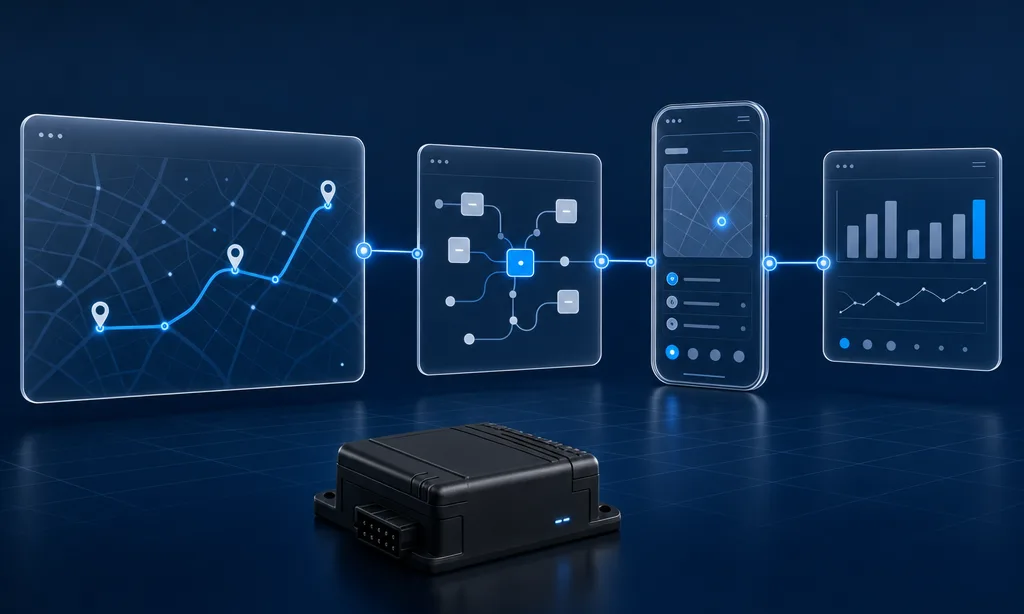
Everyone has the features. The question is whose data and whose roadmap
A monolithic platform covers the standard tasks: tracking, reports, notifications. But the data is locked inside, the API is secondary, and every non-standard feature is a ticket to the vendor and months in someone else's roadmap. As long as you resell someone's platform, your product is their product with your logo in the corner.
What Composable Telematics means
Composable Telematics is an approach in which a telematics product is assembled from independent platform capabilities with documented interfaces, instead of taken as a closed monolith. Each capability works on its own, connects to the others through APIs, and can be replaced without rewriting the whole stack. Telematics moves from white-label through headless to composable — and on to agent-ready, where AI agents — not just people — work with the platform.
- Every capability is self-sufficient: Location Intelligence, IoT Logic, IoT Query, and the application layer each work on their own. There are no all-or-nothing dependencies.
- Interfaces are open in both directions: you can enter any capability with your own data and exit to your own systems — through API, SDK, and MCP.
- The catalog is open: device and OEM sources, AI-agent access, and integrations add to the core. The list of capabilities grows rather than being fixed by a single product.
The platform capability catalog
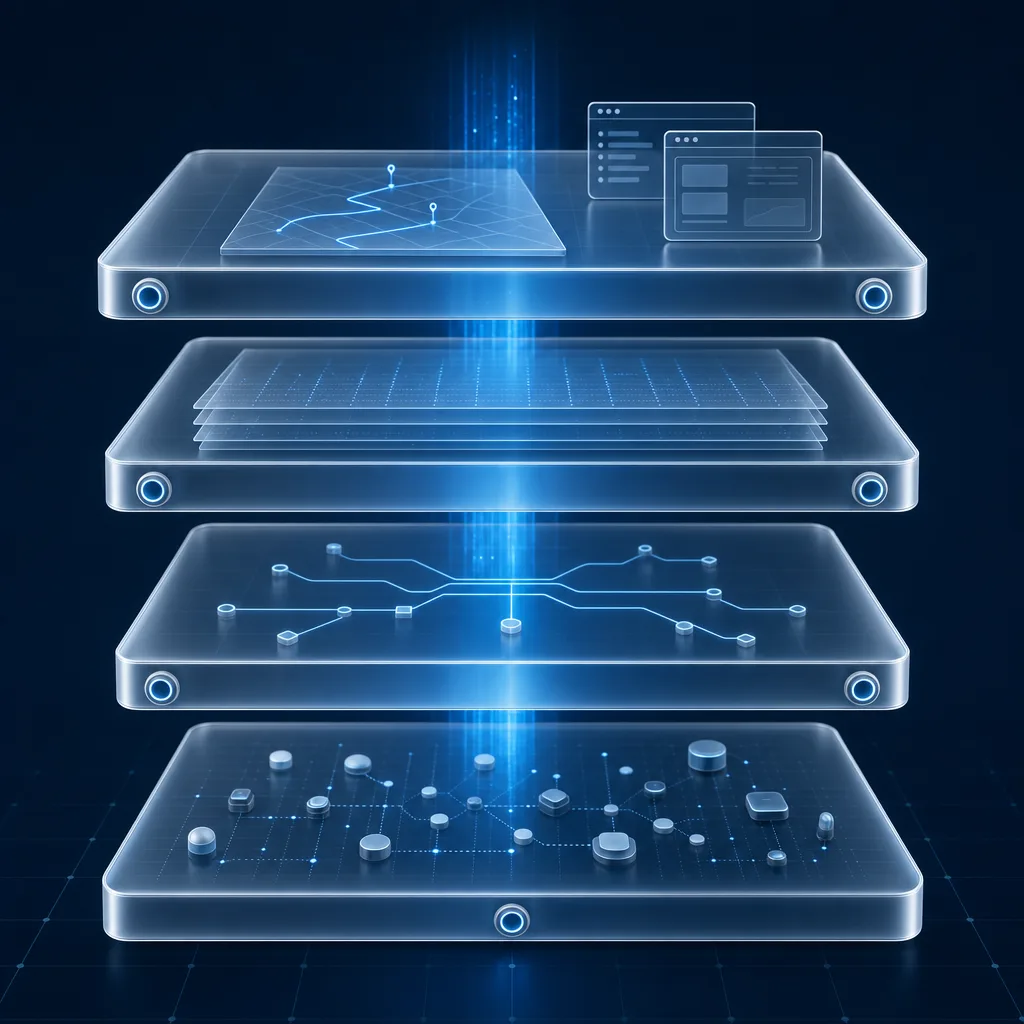
The core is the four capabilities below; start from ready-made visibility or drop down to the data. The platform is wider still: APIs and SDKs, device and OEM support, and AI-agent access through MCP.
Location Intelligence
Ready-made operational visibility: a live map, geofences, event rules, route replay (Time Machine), reports, and secure geo-links. It turns a device signal into an operational picture of the field — with no interface development. DocumentationDocumentation
IoT Logic
Ingest data from devices and OEM sources, decode protocols, enrich and route the streams — into your systems or further down the stack. New sources and processing rules are configured in the flow builder, with no platform release. DocumentationIoT LogicOEM telematics
IoT Query
PostgreSQL-compatible SQL access to raw telematics data. BI dashboards, ML models, your own analytics — by direct query, not a CSV export. Connection setupData schemaIoT Query
Application layer
White-label web and mobile apps: domain, logos, and color themes under your own brand. Launch with no front-end development. When you need your own interface, the same data is available headless, through the API. White-labelHeadless
Connect at any layer. Pull the data wherever you need it
Telemetry moves bottom-up: from devices through IoT Logic to the data layer, Location Intelligence, and applications. But you don't have to use the whole stack. Plug in your own source, interface, or storage wherever your architecture needs it. Logic operationsData access
- Replace one layer instead of migrating the whole stack.
An AI agent is as much a platform client as your application
The Navixy MCP server opens account data to agents: telemetry, objects, rules, reports. The agent authenticates, works within account permissions, and needs no separate integration. Ask the agent “which vehicles were idle for more than two hours yesterday” — and it runs the query itself. Navixy MCP
User MCP and Admin Panel MCP require account authentication; the docs MCP is public. The agent acts within the bounds of the account's permissions.
One infrastructure — different products
The infrastructure is the same for TSPs, product teams, and engineering departments — but each group uses it in its own way.
- TSPs and integrators: Stop reselling someone else's platform — ship an industry product: your brand, your pricing, your logic on top of ready infrastructure.
- ISVs and vertical products: Telematics as a component: FSM, insurance, cold chain. Embed data and events into your product through the API, without building telemetry ingestion from scratch.
- Enterprise engineering teams: Equipment data in your own warehouse and BI, by SQL query. Without a vendor dashboard that no one opens.
The Navixy team are professional, courteous and always willing to listen. Great company and great people. This is the most comprehensive platform i have ever used. Its never been easier to integrate new devices.
Review from the Navixy customer review program.
Questions about Composable Telematics
Is Composable Telematics an industry standard?
Is having an API enough to make a platform composable?
Are Headless Telematics and Composable Telematics the same thing?
Is white-label telematics already composable?
When is building the infrastructure yourself not worth it?
What does Location Intelligence add on top of data ingestion?
Does Composable Telematics remove vendor lock-in?
What evidence should I ask a vendor for?
Can I connect an AI agent or a developer tool to Navixy?
Start with the documentation
Work through the architecture yourself — or in 30 minutes with a Navixy engineer, on your own scenario.
Start with a single capability or assemble the whole stack for your scenario.